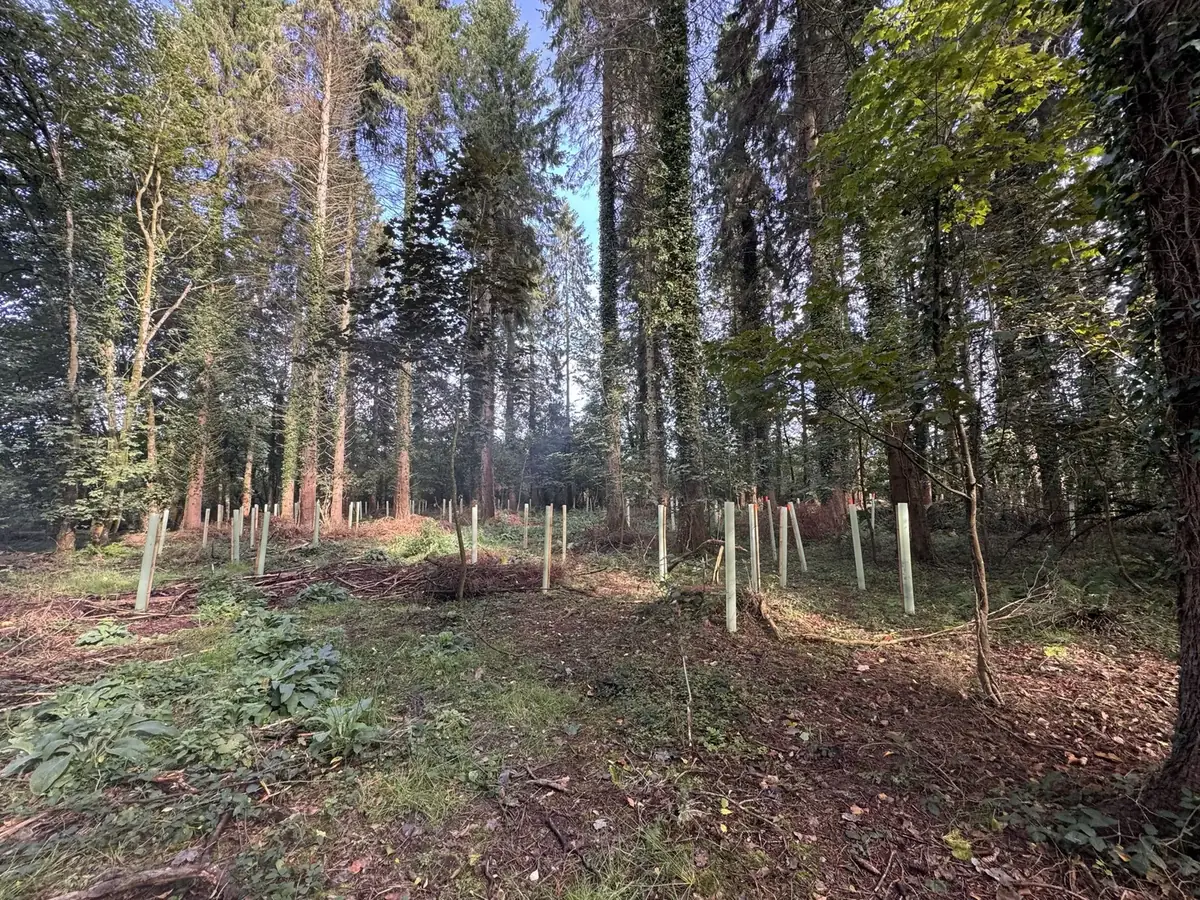
Continuous cover forestry: a permanent forest that keeps producing timber.
Moving single-age conifer plantations towards permanent, mixed, multi-aged forest that keeps producing timber — every stem marked, every departure recorded, permanent plots remeasured on a three-year cycle. Members of ProSilva Ireland; an estate under FMI management was a finalist in the RDS Irish Forest & Woodland Awards 2025/26 for its first block converted.
From objectives to the next crop.
Transformation is a programme, not a single operation. These are its parts, as they run on the estate we manage for a utility.
Objectives first
The plan orders its objectives by constraint, not by the value of the output — water and soil, biodiversity and native composition, resilience and continuous canopy cover, landscape, then timber, which pays for all of them.
Licensing
Continuous cover thinning licences, Appropriate Assessment where a designated site adjoins, the closed season and water-catchment conditions — tracked against the operation each covers.
Marking
Every stem removed is individually selected and paint-marked where the system calls for it (a few uniform stands are prescribed by volume, with demonstration plots), and the residual basal area is recorded for each subcompartment before felling begins. Marking is a decision, not an instruction: where the prescription changes on the ground, the change is recorded with its reason and its volume consequence.
Sale and supervision
Timber sold standing by scored tender — price, the crew’s profile and CVs, programme and reliability — with experience of continuous cover, Natura 2000 sites and water-sensitive ground a condition of eligibility. Operations supervised fortnightly with weekly reporting.
Reconciliation
Felled volume, volume sold and assortment out-turn reconciled on verified weighbridge dockets, tallied independently of the contractor and the mill, with each departure from the estimate attributed to its cause.
The next crop
Regeneration worth protecting is identified by survey a year after each thinning and protected stem by stem; enrichment planting uses Irish-origin native stock of local provenance. Every tree and shelter is a GPS point in the estate GIS.
Deer are the one constraint on the regeneration the system depends on. Shelters, not fencing.
Under continuous cover the trees that will replace the present crop have to establish beneath the canopy while it is still being thinned. Natural regeneration does that at no establishment cost — but only where it survives browsing.
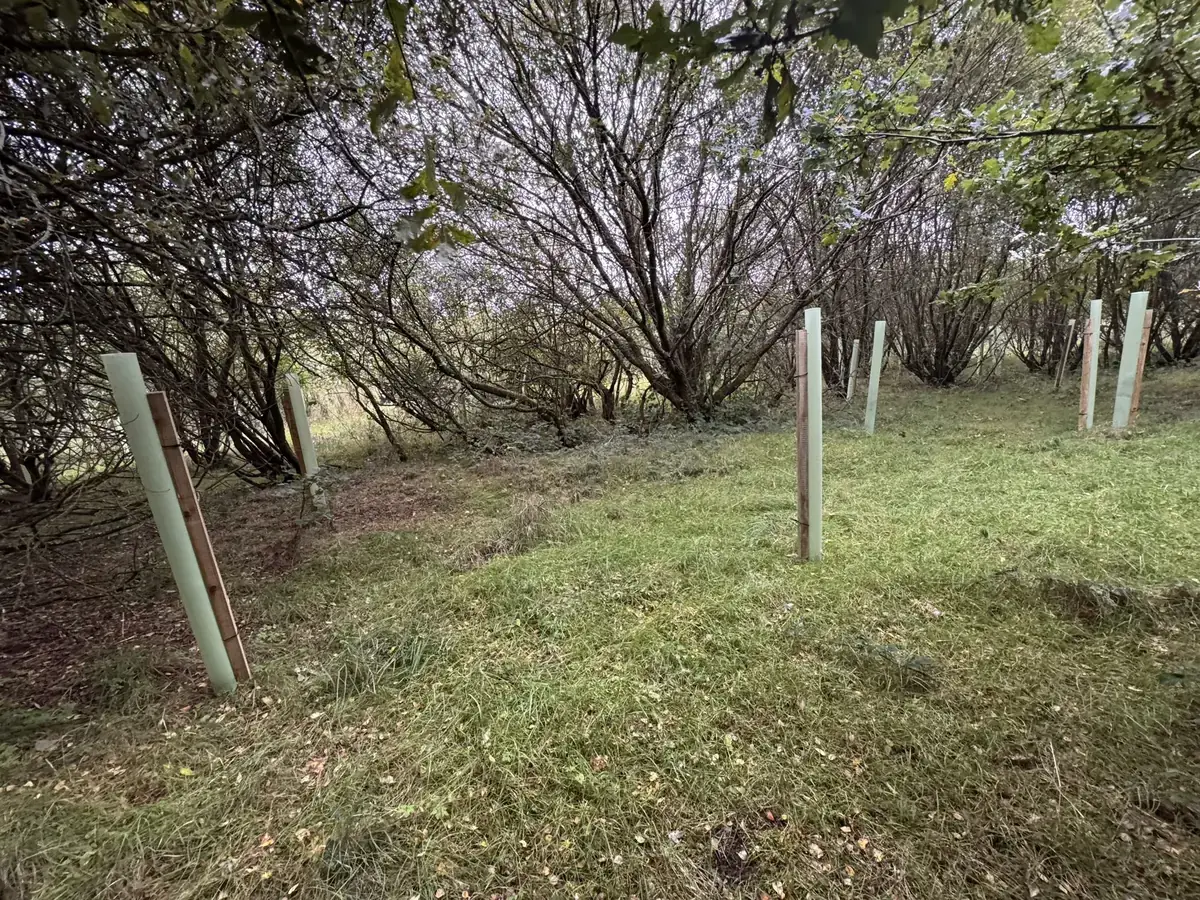
Rather than fence a block, individual shelters are fitted by hand to established natural regeneration: stems worth protecting are identified by survey, then protected with no machinery and no ground disturbance, so the work can follow a thinning immediately and reach any part of the stand. A crew of four works a section at a time, and the output and crew rates recorded in 2026 let the work be budgeted across an estate and forecast for the blocks still to be thinned. In autumn 2026, at the owner’s direction, 590 naturally regenerating native saplings were found, sheltered and GPS-recorded across three sites — ten species, three in four of them oak — after 200 Irish oak of local provenance had been planted as enrichment the previous winter.
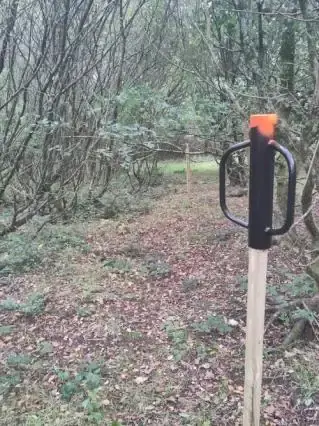 1
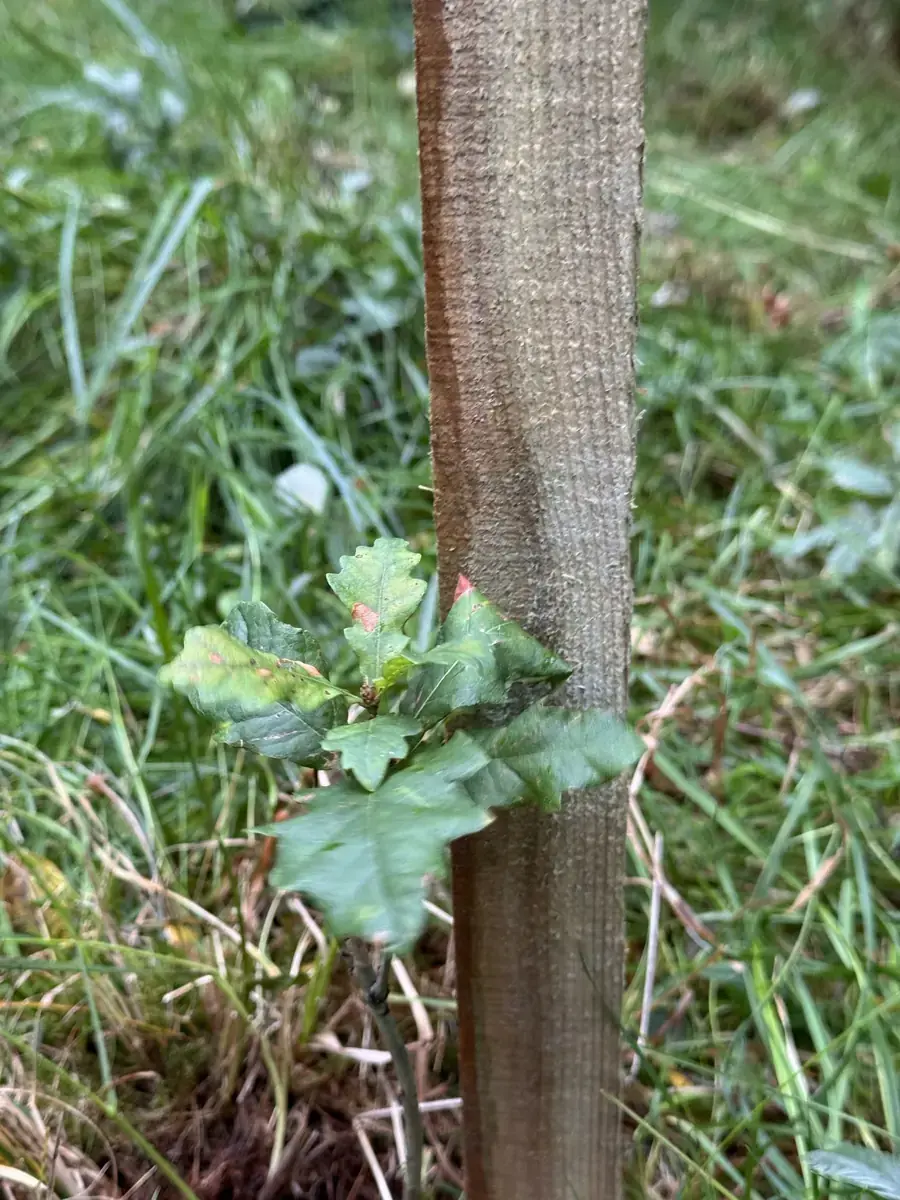
Stake driven
By hand, with a post driver, beside the stem selected by survey.
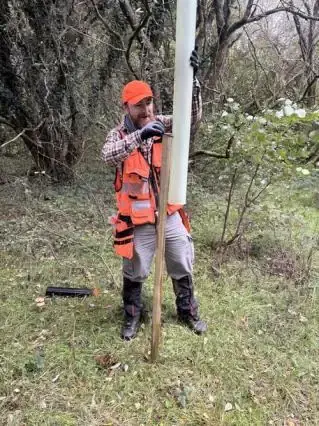 2
Shelter positioned
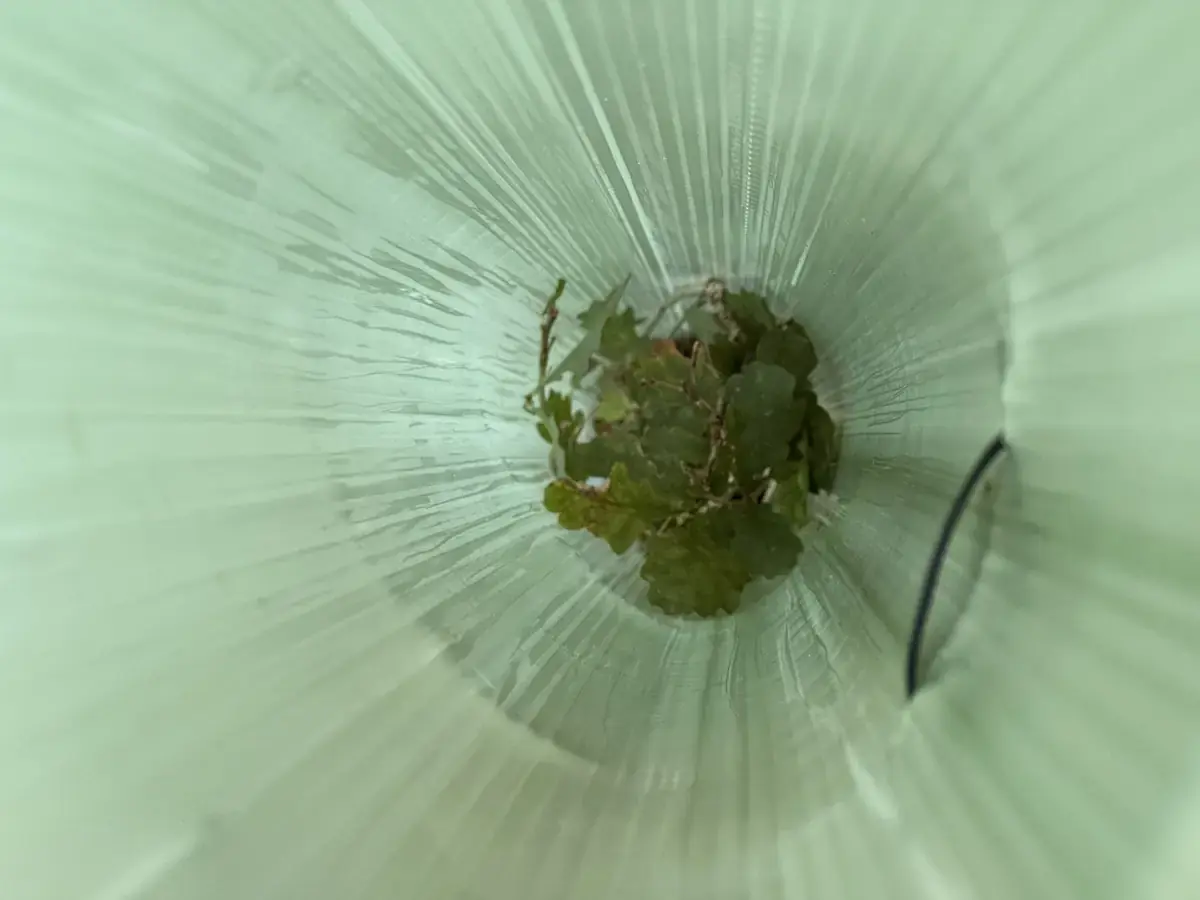
A 1.5 m shelter lowered over the regenerating stem and aligned on the stake.
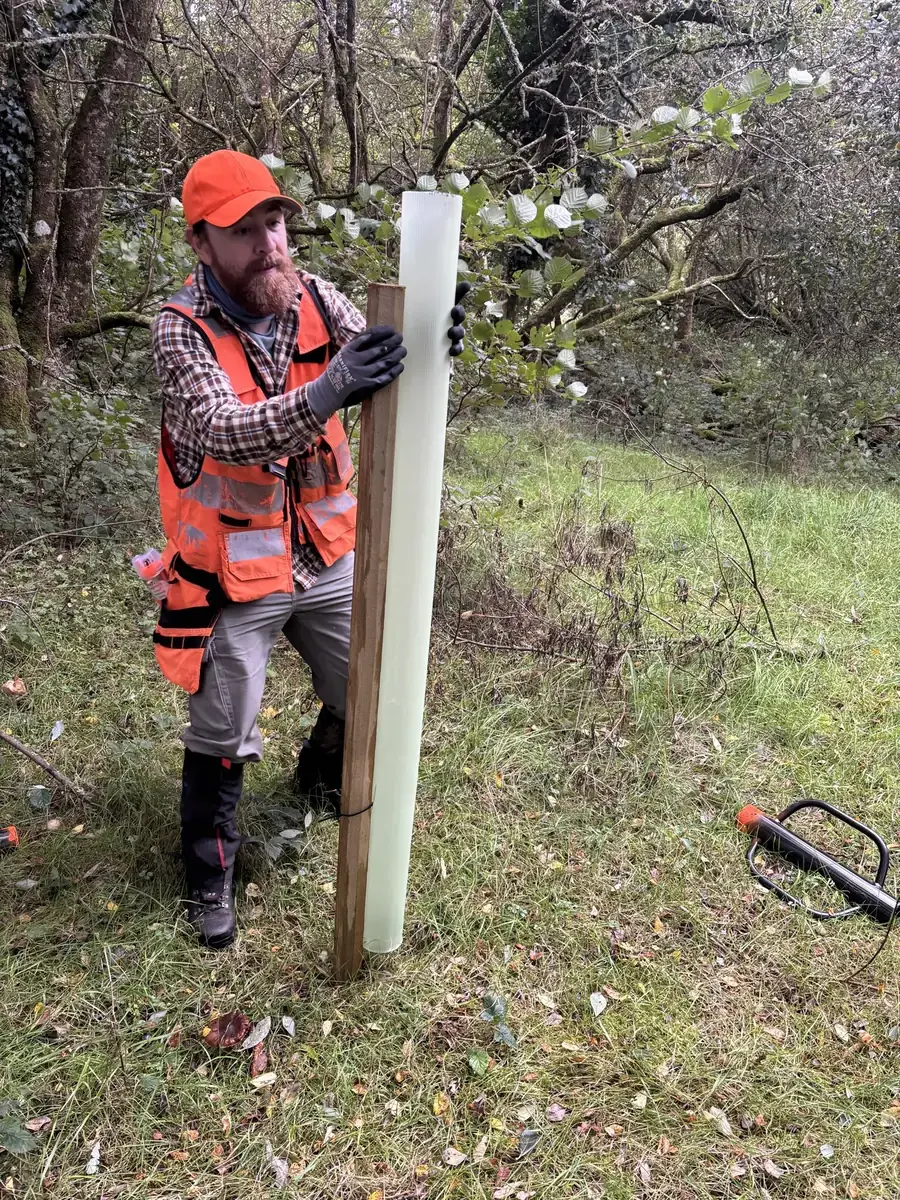 3
Tied and complete
On a 1.65 m stake, to be inspected at year one and year three.
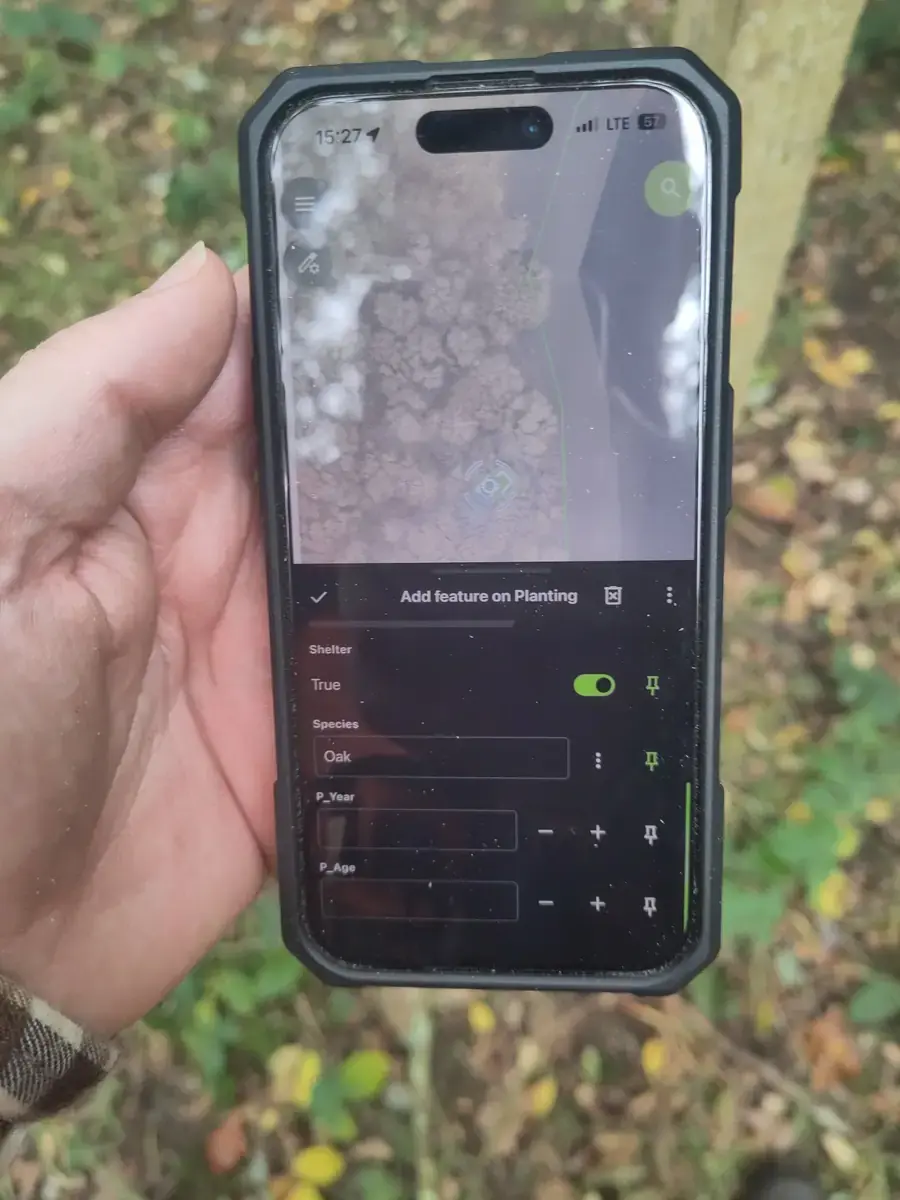 4
Position recorded
Species, shelter and location captured on a mobile GIS in the field — a point in the estate project.
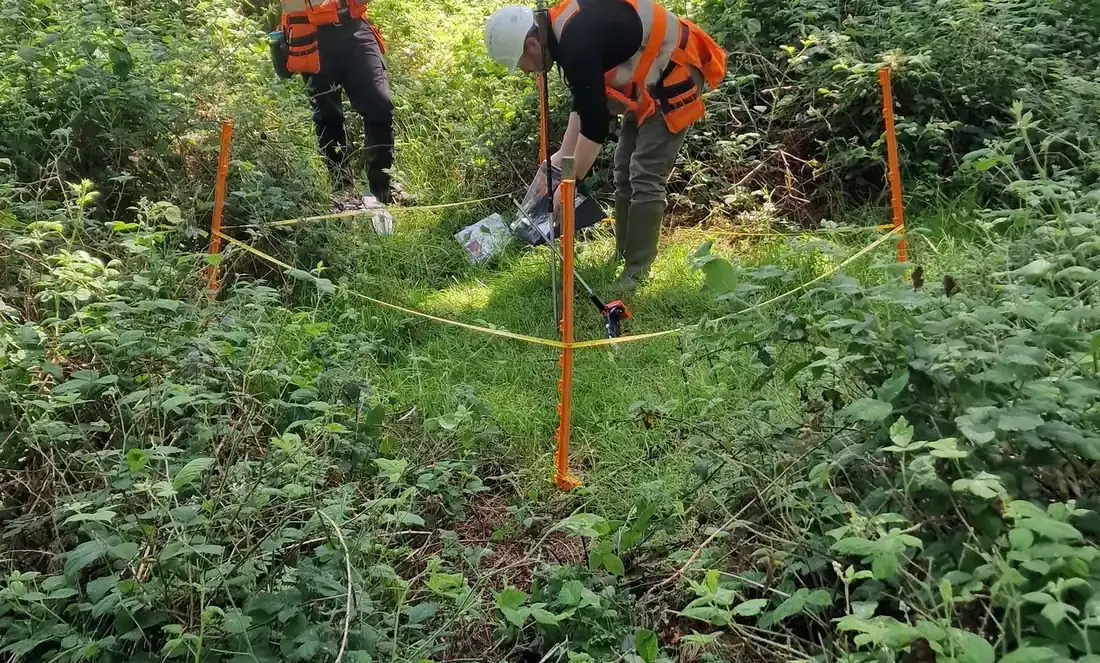 Permanent-plot measurement: callipers, vertex, digital capture
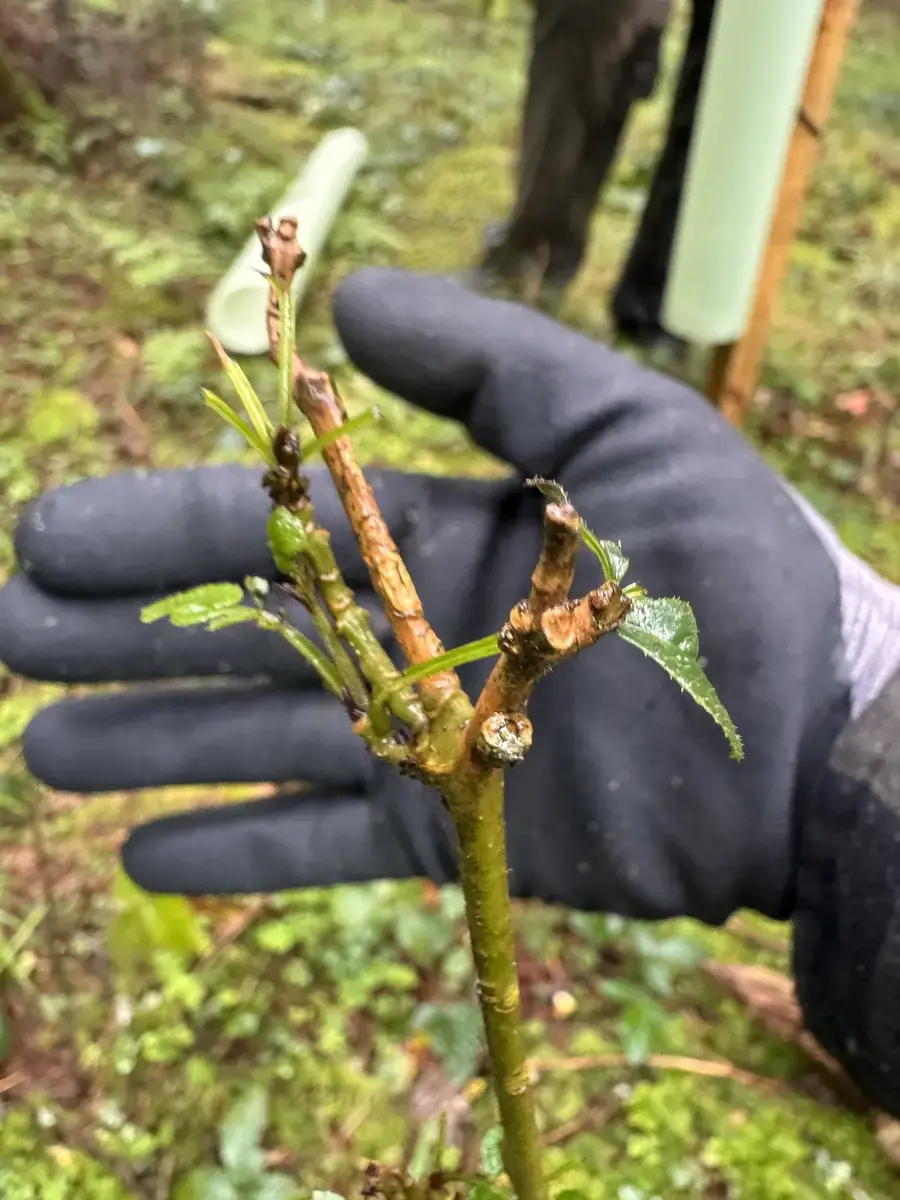
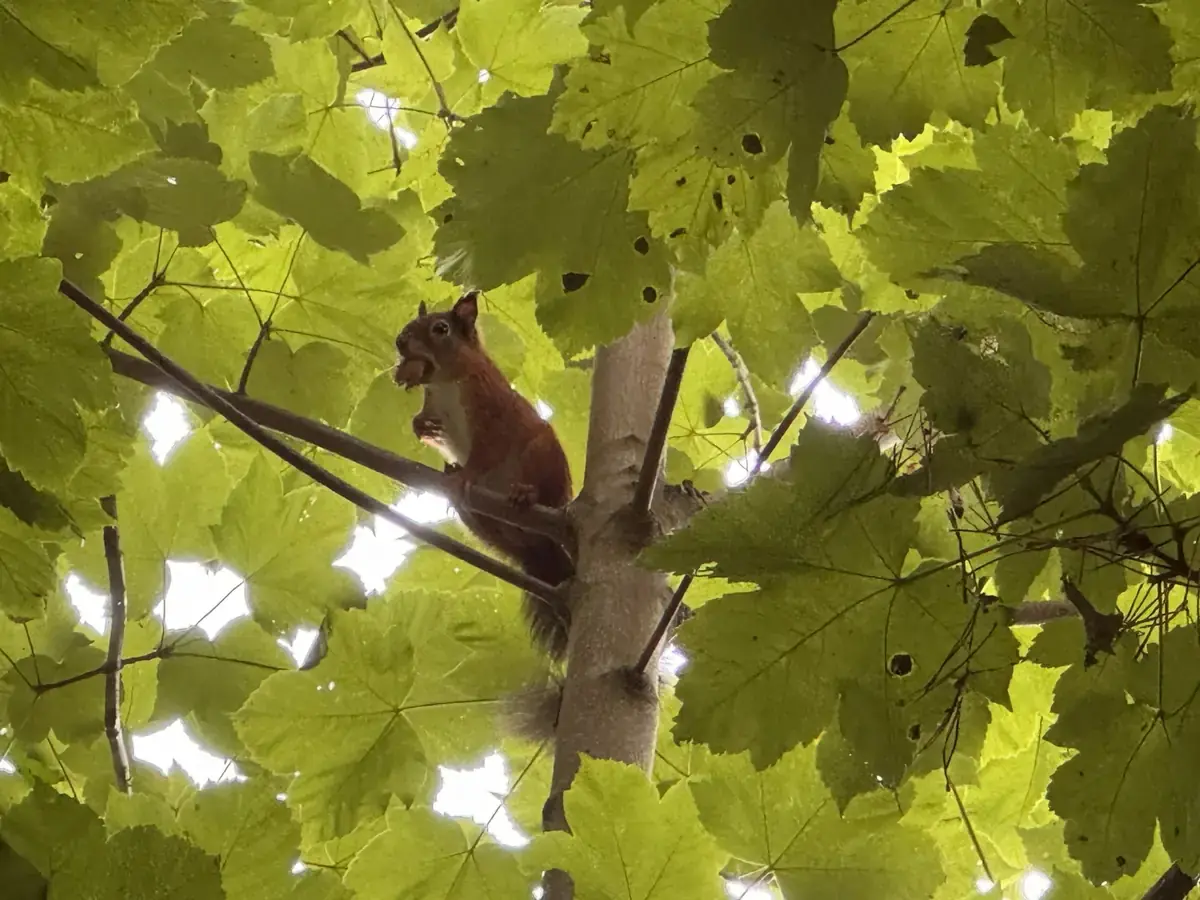 Red squirrel, in sycamore
Deadwood, habitat and monitoring are conditions of how the forest is worked.
Deadwood is retained at thinning and veteran, character and cavity trees are held. A permanent biodiversity plot network is remeasured on a fixed cycle; the whole estate is habitat-mapped to Fossitt Level 3; and drone orthophotography documents the change — paired imagery before and after the first intervention.
On the estate we manage, the 2025–26 baseline recorded 97 plant species, 90 of them native, with native species making up 78% of the ground cover; deadwood is present in half the plots, with 218 dead stems measured; and non-native regeneration — beech and sycamore, 26% of the young trees — is managed so it does not out-compete the natives. Browsing indicators join the plot method at the next full remeasurement, so pressure can be tracked against the same network as regeneration and ground flora.
- An 82-plot permanent network on one estate — 55 plots in 2025, expanded to 82 in 2026
- Fossitt Level 3 habitat mapping across all 640 ha
- Drone orthophotography at 3 cm per pixel over the harvest areas, paired with earlier imagery
- LiDAR and multispectral survey, flown and processed in-house, being brought to the estate next
Continuous cover forestry and biodiversity monitoring, recognised twice in 2026.
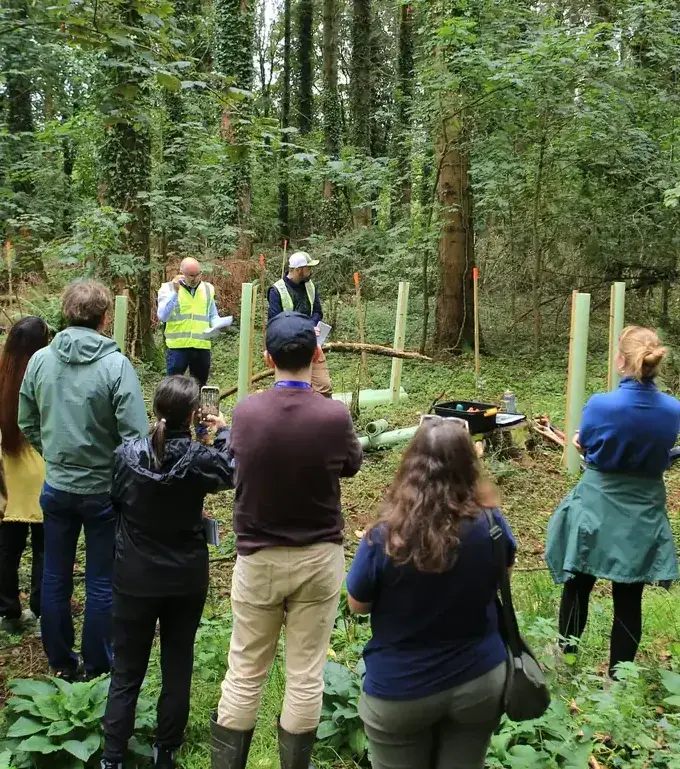 September 2026 · in the stand thinned a year earlier
Shown to the award judges, then to the EU Nature Directors.
The estate’s first transformation block was a finalist in the RDS Irish Forest & Woodland Awards 2025/26, Silvicultural Excellence and Innovation; the judges visited the site. In September 2026 the owner hosted the EU Nature Directors — the heads of the national nature authorities of the Member States — in the stand thinned a year earlier. The silviculture was presented on site by the owner and FMI together: how a transformation thinning differs in practice from a conventional one, the oak regenerating but surviving only where protected, and why deer browsing is the limiting factor on restocking this forest without replanting it.
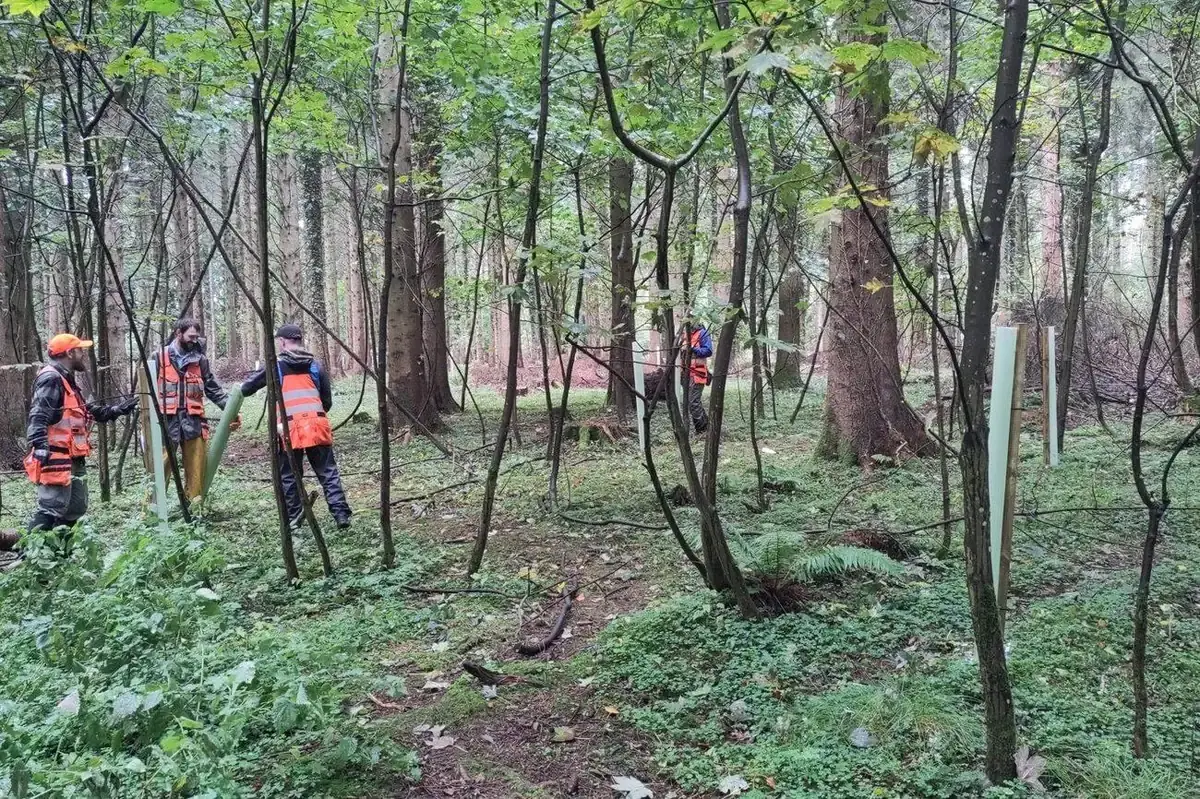 Four of the FMI crew, working a section of the stand thinned in 2025
Stakes and shelters carried in and fitted stem by stem.
The stems inside the shelters are not planted trees. They germinated on site from the seed already in the stand, and cost nothing to establish. Protected and released at each thinning, they are the species and structural diversity that makes the future forest resilient to wind, drought and disease — the three things that would end production on this ground.
Before you pick up the phone.
Does continuous cover mean less timber?
It means timber taken as thinnings from a permanent forest rather than all at once at clearfell. On the estate we manage, the first transformation block was thinned in 2025 — 26.8 ha, 2,058 m³ felled, every stem marked and every load reconciled — and the next 44.2 ha is tendered and licensed for 2027. The revenue stays on the estate and funds the management programme.
Can a clearfell licence become a continuous cover licence?
On the estate we manage, the Department converted the existing clearfell licence applications to continuous cover thinning licences in time for the first intervention. We prepare the applications and the silvicultural case behind them.
What stops natural regeneration?
In our experience on the ground, deer browsing — not seed supply and not light. Regeneration follows the seed sources and is strongest beside mature oak and old woodland; it survives only where it is protected. Individual shelters fitted by hand, each one GPS-recorded, let protection follow a thinning immediately and reach any part of the stand without fencing, machinery or ground disturbance.
How do you know it is working?
Because it is measured: permanent biodiversity plots remeasured on a three-year cycle, residual basal area recorded for every subcompartment before felling, every departure from the marking recorded with its reason, and every protected sapling checked each autumn against the GPS layer.
Thinking about continuous cover?
Tell us about the stands. A forester replies within one working day. The first call is free.